
July 22, 2026 ⏱️ 12 min
By Eduard M. & Sami B. (RnD – BacknDB Group)
Artificial Intelligence has moved past experimentation and into production, running inside the products, decisions, and workflows businesses depend on daily.
That shift raises a harder question than “can we train it?”: can we run, scale, secure, and maintain it reliably and affordably? While Python still dominates model training, the infrastructure carrying AI into production, including inference services, edge runtimes, data pipelines, and safety-critical platforms, is increasingly built in Rust, valued for its memory safety, predictable performance, and concurrency.
This article examines where Rust fits and what to weigh before adopting it.
Why Rust Matters Today
AI systems are increasingly expected to operate in environments where failure is expensive – autonomous devices, real-time analytics platforms, industrial systems, robotics, IoT fleets, and mission-critical infrastructure.
In these contexts, the choice of programming language is not a developer-preference question. It is a question about economics and risks.
Rust delivers memory safety without a garbage collector, which eliminates entire categories of defects that historically drive outages and security incidents: null pointer errors, data races, and unsafe memory access.
It does this while maintaining performance comparable to C and C++, the languages traditionally used when efficiency is non-negotiable.
For business leaders, the practical implications are straightforward:
- Lower production risk – A large share of severe security vulnerabilities and runtime crashes in C/C++ codebases stem from memory issues. Rust prevents most of them at compile time, before code ever ships.
- Predictable infrastructure cost – Without a garbage collector and with a small runtime footprint, Rust services use less CPU and memory, which translates into lower cloud bills and smaller hardware budgets at the edge.
- Confidence at scale – The Rust compiler enforces correct handling of ownership, error states, and concurrency. Teams ship faster because problems surface during development rather than during incidents on Saturday night.
- Long-term maintainability – Strong typing and explicit error handling reduce the “surprise factor” when new engineers join a project or when an existing system is extended years later.
Where
Rust Fits
Rust is not displacing Python in machine learning research, and it does not need to. The strategic value lies in everything that happens after the model is trained – inference, serving, integration, and deployment.
The Rust AI ecosystem has matured rapidly. Several frameworks now allow machine learning models to run directly inside Rust applications, which is exactly what makes the language a strong fit for production inference and edge deployment.
The most visible example is Candle, an open-source framework developed by Hugging Face that focuses on performance, GPU support, and lightweight binaries. It allows models such as LLaMA, Whisper, or T5 to run inside Rust applications without dragging in a heavy Python runtime.
Around Candle, a broader toolset has emerged:
- Burn for deep learning
- ONNX Runtime bindings for portability of pre-trained models
- Kornia-rs for real-time computer vision
- and others
Together, they enable a pragmatic two-language pipeline that most organizations end up wanting anyway:
The standard pattern. Train in Python with PyTorch or TensorFlow → export the model to a portable format such as ONNX or GGUF → serve it from a Rust inference service in production.
This split plays to the strengths of both ecosystems. Python remains ideal for experimentation, data science, and training. Rust takes over for the operational layer that serves predictions, where the priorities are reliability, throughput, and cost.
The measurable benefits are well documented in production deployments: faster cold starts, lower memory consumption, smaller deployment artifacts, and more predictable behavior under load – all of which matter when you are paying for the infrastructure that hosts your model.
How AI Reshapes Rust
For years, Rust carried a reputation as a difficult language to adopt. Its ownership model, strict compiler, and unfamiliar patterns raised the cost of onboarding new engineers. That barrier is shrinking quickly, and the cause is the same technology Rust is being used to deploy AI.
Modern AI coding assistants now help developers interpret compiler errors, generate boilerplate, refactor across crates, and navigate large codebases. The combination is unusually powerful. AI generates and revises code at speed, while the Rust compiler acts as a continuous correctness filter, catching mistakes immediately rather than letting them surface as runtime defects.
The correctness flywheel. In looser languages, AI-generated code can look correct while hiding subtle runtime problems. In Rust, the compiler catches many of those issues on the spot. The AI generates, the compiler rejects what is unsound, the AI revises, and the developer ends up with safer output than either tool would produce alone.
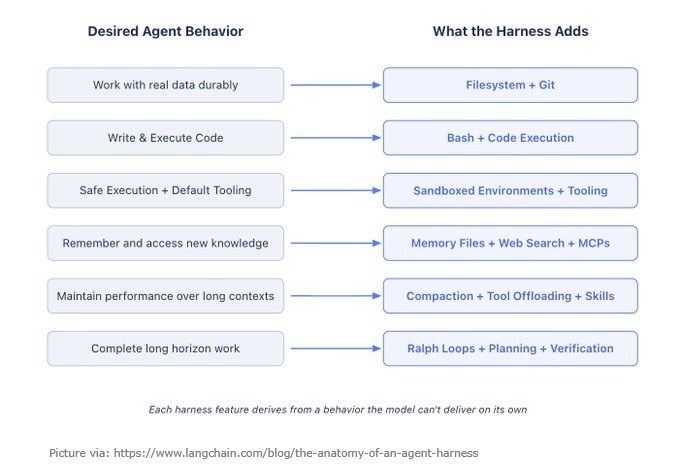
To get real value from AI-assisted Rust development, teams need to go beyond ad-hoc chat prompts and treat AI context as a first-class part of the project. In practice, this means three things:
- Project-aware instructions – Files such as AGENTS.md, CLAUDE.md, or editor-specific rule files describe the project’s conventions – error handling style, architectural boundaries, preferred concurrency patterns – so the AI behaves like a teammate who knows the codebase, not a generic generator.
- Current documentation context – AI tools often suggest outdated APIs because their training data lags behind library releases. Tools such as Context7 inject up-to-date, version-specific documentation into the AI’s working context, so suggestions match the dependencies actually in use.
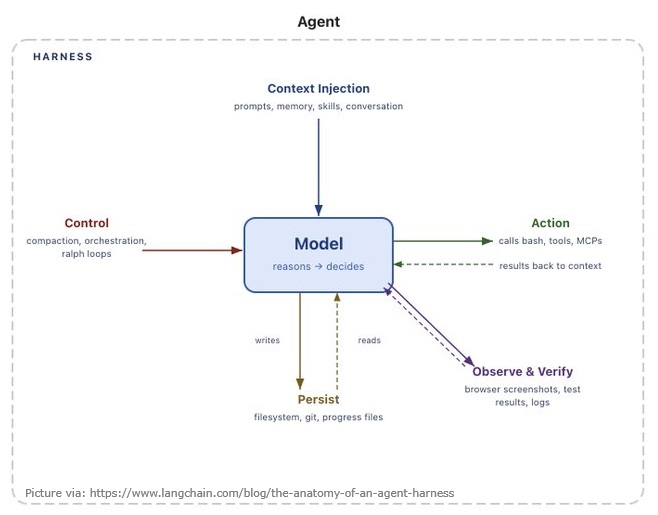
- Multi-agent workflows – Rather than one large model doing everything, specialized agents handle planning, testing, linting, and documentation. In Rust projects, agents can run cargo check, inspect compiler errors, fix lint warnings, and validate changes in parallel.
Context-aware editors such as Cursor and Zed can index the full codebase and feed that structure into the AI, which makes them natural homes for the rules and documentation above.
For building AI features inside Rust applications, a small but growing set of crates – rmcp (a Rust SDK for the Model Context Protocol), Rig, langchain-rust, llm-chain – let teams build agents that reason, call tools, and maintain state while still benefiting from Rust’s type safety.
Platform Engineering and MCP
Writing application code is only one part of delivering a system. Deploying it, provisioning supporting services, configuring environments, and maintaining infrastructure over time often consume just as much effort – and that is where many AI initiatives stall after the prototype.
In the Rust ecosystem, platforms such as Shuttle illustrate a different approach: infrastructure expressed directly in code. Instead of maintaining sprawling YAML configurations, developers declare resources – databases, AI endpoints – using Rust attributes that the platform reads at deploy time.
When this is combined with AI-assisted development, an engineer can ask an assistant to add a persistent store or deploy a new service, and the assistant can reason from the application code itself. The operational friction between writing software and shipping shrinks.
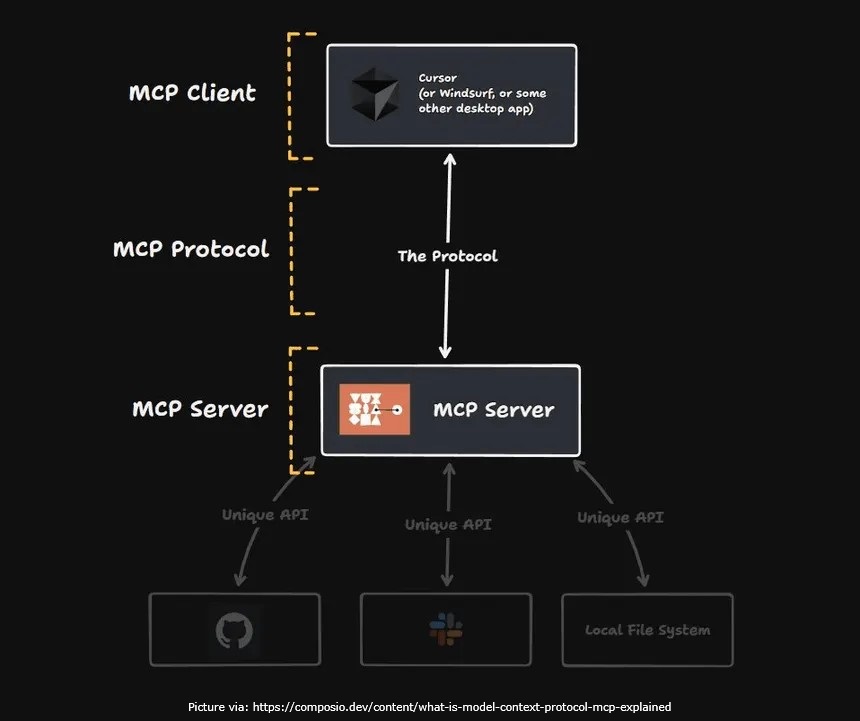
A second piece of infrastructure deserves attention: the Model Context Protocol (MCP). MCP gives AI systems a structured way to interact with tools, data sources, and internal services.
A Rust-based MCP server can expose production data, internal APIs, or domain-specific workflows to an AI assistant in a controlled way, with the safety and performance properties Rust provides.
Using libraries such as rmcp together with web frameworks like Axum, teams can build servers that support streaming communication, progress updates, and long-running interactions – patterns that matter for dynamic systems where a simple request/response is not enough.
For organizations building AI-enabled internal platforms – the kind that connect language models to real business systems – Rust offers a strong foundation: high performance, predictable behavior, and the safety guarantees that compliance and security teams increasingly demand.
Practical Case
Consider a common scenario: a team maintains a Rust boilerplate used to start new internal projects.
Over time, the boilerplate accumulates features and standards – testing, linting, code style, and pull-request conventions. It becomes powerful but harder for new teams to adopt.
New contributors either read through extensive documentation or ask maintainers for help, both of which slow delivery.
The obvious response is to add static AI instruction files such as AGENTS.md or CLAUDE.md.
For a boilerplate, that turns out to be the wrong answer.
Static documentation describes the repository as it exists at one moment in time. Once a team forks it and changes authentication, conventions, or domain models, the original documentation is no longer accurate – and may actively mislead the AI tools the new team uses.
A more durable solution is to ship not just documentation, but the system that generates documentation, instructed through a PLAYBOOK.md paradigm.
The boilerplate includes a machine-readable architecture reference – crate responsibilities, dependency rules, test conventions, project boundaries.
A bootstrap wizard then inspects the forked repository, detects what it can, asks the contributor for the rest, and produces custom AI instruction files tailored to that specific project.
The business outcome. Onboarding becomes self-service. Contributors get accurate, context-aware AI guidance for whichever tools they use – Claude Code, Cursor, Copilot, or something else – without depending on maintainers to keep static documents in sync. Internal platforms scale without the usual documentation-rot tax.
Edge and High-Stakes Industries
Two domains illustrate why Rust’s properties matter for AI well beyond cloud services: edge computing and mission-critical industries such as defense.
A growing share of AI workloads needs to run close to the device rather than in a remote data center – drones, industrial sensors, robots, autonomous vehicles, IoT fleets, and embedded systems. Rust is well suited to these environments because it produces small binaries, uses memory predictably, and delivers near-native performance without a runtime to ship alongside it.
Running inference at the edge reduces latency, improves privacy, and makes systems resilient when network connectivity is unreliable. Research into constrained neural networks suggests inference can run even on devices with very limited memory, which expands the range of products this combination can support.
The same properties draw attention from regulated and mission-critical sectors. European governments and companies are investing heavily in software-defined defense: autonomous drones, battlefield analytics, real-time sensor processing, surveillance, and cyber defense.
Helsing, a European defense technology company, builds AI software for analyzing sensor and weapons-system data, and is part of a broader trend toward AI-assisted, software-defined defense capability. Rust is attractive in these settings because it delivers the performance these systems require while reducing the memory-related risks that have historically caused critical failures in C and C++ code.
Where reliability is non-negotiable, safety guarantees in the language itself are a measurable advantage.
When
to Choose
Rust
Rust is not the right tool for every project, and the choice should be made on the same grounds as any other architectural decision: where does the cost go, and where does the risk sit?
Rust is a strong choice when:
- Performance, reliability, or long-term maintainability are explicit business priorities.
- The system runs at the edge, embedded, or in resource-constrained environments where small binaries and predictable memory matter.
- You are building production inference, AI-powered APIs, or internal AI platforms where uptime and throughput drive cost.
- You operate in a regulated or mission-critical environment where memory-safety guarantees to reduce compliance and operational risk.
- You expect AI tools to generate a significant portion of code; the compiler’s strictness then becomes a safety net rather than an obstacle.
Rust is probably not the right starting point when:
- The work is primarily experimentation, data exploration, or model training, where Python’s ecosystem remains far ahead.
- Time-to-market for a simple CRUD application outweighs long-term operational efficiency.
- Your team has no exposure to systems programming, and the project does not justify the learning investment.
- Building and maintaining a team with strong Rust expertise would be difficult given foreseeable hiring constraints.
The honest takeaway. Rust is not the easiest language to adopt, but AI assistance is steadily lowering that barrier. At the same time, Rust’s strictness is exactly what makes AI-generated code safer and easier to validate. That feedback loop is what makes the language particularly relevant in the AI era – and what justifies its growing role in production grade AI infrastructure.
Final Thoughts
AI is reshaping the software landscape. As intelligent systems move from research environments into production, the demand for fast, safe, and economical infrastructure is growing – and the cost of getting that infrastructure wrong is rising in parallel.
Python will continue to lead the experimentation and training half of the AI lifecycle. Rust is increasingly the answer for the other half: serving, integration, edge deployment, internal platforms, and safety-critical systems. The most likely future is hybrid, and the organizations that recognize this early will spend less on infrastructure, ship more reliably, and carry less operational risk than those that try to scale a single-language approach into environments it was never designed for.
For business and technology leaders, the message is practical rather than ideological. Investing in Rust today is less about adopting a fashionable language and more about building the operational foundation that AI-powered software will depend on for the next decade.
Îndemnul nostru
Efortul pus în programele pentru studenți completează teoria din facultate cu practica care “ne omoară”. Profitați de ocazie, participând la cât mai multe evenimente!
În cei 3 ani am lucrat la proiecte diverse ce au contribuit decisiv la evoluția mea profesională. Am colaborat strâns cu echipe remarcabile, a căror dedicare și sprijin au fost fundamentale în buna dezvoltare a lucrurilor. Cu fiecare proiect, am învățat nu doar aspecte tehnice, ci și abilități esențiale de comunicare și colaborare, reflectate în experiența mea privind interacțiunile cu clienți și modul în care o echipă eficientă operează. Aceasta este cultura companiei, de la ritmul uneori alert al zilei de lucru și practicile Agile, până la momentele relaxante de socializare cu colegii în pauzele de cafea și activități recreative precum darts și ping pong.

Am făcut cunoștință cu echipa NetRom prin intermediul programelor Internship și NetRom Software Academy, in care am descoperit că noțiunile învățate acasă au totuși aplicabilitate, chiar în cadrul unor aplicații reale. Acele experentie m-au convins să aplic pentru un job.
Mentorii foarte deschiși și colegii cu experiență care mi-au răspuns prompt la toate neclaritățile au transformat provocările în task-uri rezolvate cu succes împreună. Făcând parte din #teamnetrom mi-am depășit frica de a greși și am evoluat într-un mod echilibrat pentru mine.

Am aflat de programele NetRom de la o prezentare organizată în facultate de companie. Am decis să mă înscriu la Summer Camp din dorința de a înțelege ce anume ar presupune o cariera în IT. În urma acestui stagiu de practică, am reușit să dezvolt propria aplicație cu ajutorul mentorilor care mi-au oferit informații teoretice, dar mai ales practice, pe care nu aș fi putut sa le găsesc într-un tutorial aleatoriu de pe internet. Modul meu de abordare a aplicaților s-a schimbat odată ce am înțeles în ce constă mai exact procesul, ce presupune un mediu real de lucru și importanța muncii în echipă.

NetRom Software Testing Academy a fost punctul de plecare pentru o carieră pentru mine. Pe parcursul sesiunilor am avut oportunitatea să cunosc bazele necesare pentru asigurarea calității unui produs, urmate de o zi în companie unde am văzut teoria pusă în practică.
Recomand tuturor celor care își doresc o carieră în QA să ia în considerare această academie, fiind destinată atât celor din domeniu, dar nu numai.

Am descoperit NetRom prin intermediul unui program de internship și am fost impresionată încă de la început de mediul de lucru plăcut, de susținerea și angajamentul colegilor. A fost o oportunitate deosebită de a lucra într-o echipă de proiect, cu roluri specifice, și de a înțelege mai bine cultura companiei. Întreaga perioadă s-a dovedit o experiență valoroasă, atât din punct de vedere al cunoștințelor acumulate, cât și prin prisma relațiilor dezvoltate. În momentul în care mi s-a propus să continui ca angajat permanent, a fost o decizie ușor de luat, bucuroasă fiind să pot aplica cele învățate, dar și să adaug cunoștințe noi în fiecare zi.
